2.4 Strategy 2024-2026: Focus, Transform, Expand
The 2024-2026 strategy consolidates the progress achieved between 2020 and 2023 while advancing BAM’s transformation toward growth. You can find more about this in Our strategic evolution.
The three pillars – Focus, Transform, Expand – are being implemented in parallel as part of a continuous strategic evolution towards growth and expansion in the period 2027-2030. There is a degree of overlap between the previous and future strategy phases.
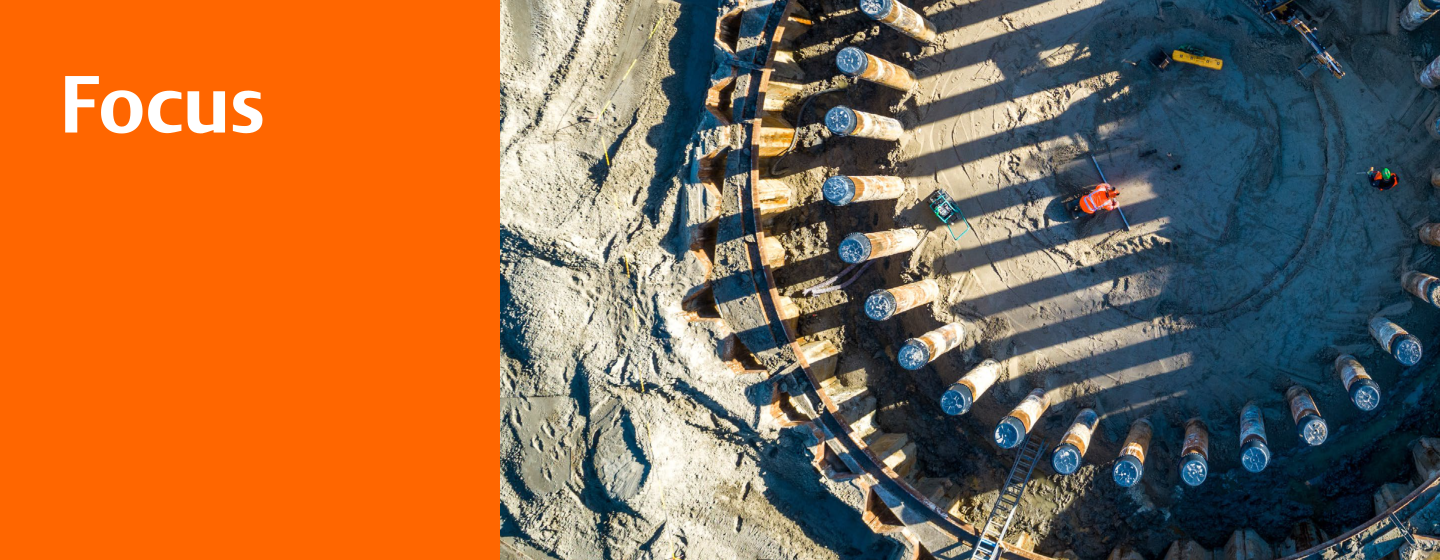
Under Focus 2024-2026, we focus on selecting profitable work that aligns with our sustainability targets to remain predictable, profitable and sustainable.
This involves being highly selective regarding markets and clients, as well as disciplined and controlled in our selection and delivery of projects. We therefore continue to concentrate on building our presence in our selected product-market combinations (PMCs), preventing portfolio or market-segment ‘creep’ and ensuring we continue to fill our pipeline with the right kinds of projects.
In the Netherlands, the focus is on (cost)efficiency in residential, being selective in non-residential projects and focusing on civil projects that contribute to sustainability, such as land stations for wind parks. This focus is underpinned by process capability: digitalisation and repetition through industrialisation. All this helps to lower our risks.
In the United Kingdom and Ireland, we focus on projects that drive predictability through having appropriate contract and commercial mechanisms with 25-30 core clients. Building relationships with select key clients provides certainty and opportunities to grow our capability. Alongside this, we are working to enhance our core and value-chain capabilities, such as advisory, design and engineering.
BAM has also brought Focus to our contract and tendering models. Our stage-gate process evaluates tenders for financial viability, strategic fit, partnership potential and sustainability alignment, ensuring each project supports our long-term financial and strategic goals. See How we select the right contracts and tenders for more information.
We have strengthened our risk discipline by choosing not to pursue large one-stage design-and-build tenders. Instead, we focus on framework agreements and two-stage tendering. These approaches enable earlier collaboration with clients, greater design maturity and improved visibility of cost and delivery, all fully aligned with BAM’s ambition to be predictable, profitable and sustainable. See How we select the right contracts and tenders for more information.
In November 2025, BAM Infraconsult bv, our civil engineering consultancy in the Netherlands, signed an agreement with Van Oord for the intended sale of Xbloc. Xbloc’s activities include the design and construction of innovative concrete armour units for protecting shorelines, ports and marine infrastructure. Xbloc is a global player while BAM’s activities now focus on the Netherlands, the United Kingdom and Ireland and on Belgium.
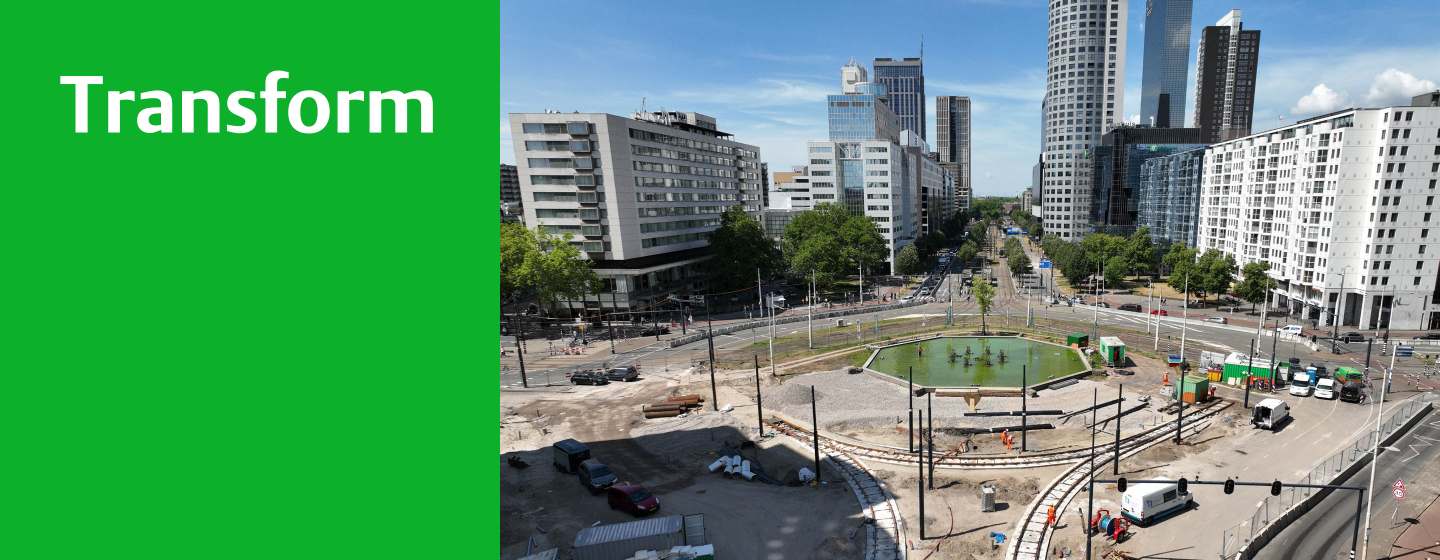
Under Transform 2024-2026, we transform products and services to evolve further, becoming more digital, scalable and sustainable.
The goal with Transform is to move away from one-off projects in favour of scalable and repeatable industrialised construction. This represents a fundamental change and is central to growing and expanding the business in line with our vision.
Key here is to concentrate on markets and clients with whom we can differentiate ourselves on sustainability, industrialised production, innovation, process leadership and strong relationships. These are the drivers that will transform our product and service offerings. Internally, we are encouraging a cultural transformation by asking our engineers to find job satisfaction in refinement, repeatability and optimisation – 'getting better at what we do' – rather than novelty for its own sake.
For the Netherlands, Transform means growing the number of biobased, industrialised Flow homes within residential, investing in sustainable asphalt through the AsfaltNu joint venture, and electrifying our vehicle park and equipment.
The Flow concept for timber-based homes encompasses multiple innovations: a customer experience centre, parametrical design, digital file-to-factory ordering, the use of biobased materials, robotics and more.
In renovating and remodelling, we use drones, 3D modelling and off-site manufacturing to fabricate energy-saving ‘wraps’ for inefficient homes.
Each wrap is tailored to the exact dimensions of the intended building before it arrives on site. Similarly, digitalisation, standardisation and repeatability are also being used in infrastructure renewal, with sensors and predictive analytics being employed to identify, prioritise, schedule and manage repairs and maintenance at the optimal moment.
For the United Kingdom and Ireland, Transform is most obviously seen in the education and health markets, and by building cross-business propositions with a client-centric approach. In education, we are building clusters of schools and hospitals under framework agreements that encourage learning loops and economies of scale. The result is standardised but customised designs that are efficient to build and sustainable. On the client-centric axis, we serve a select group of top clients rather than looking to broaden our client base. We invest in understanding their needs more deeply with the aim of working together more extensively.
Across our regions and product-market combinations, we look to join forces to deliver cross-division opportunities through key account management. We are also changing the way we serve multi-asset clients by providing them with one point of contact for all BAM organisations.
We are using generative AI in various fields. An example is to support tender teams in analysing and querying large sets of tender documentation. This Tender Assistant can also write proposals for the teams. We are also continuing our development activities aimed at strengthening our digital and operational capabilities. This includes the implementation and further rollout of SAP S/4HANA, which supports process standardisation, enhanced data quality and improved project management. We are also continuing our efforts to develop sustainable materials, such as Groenr lower emission concrete and biobased insulation.
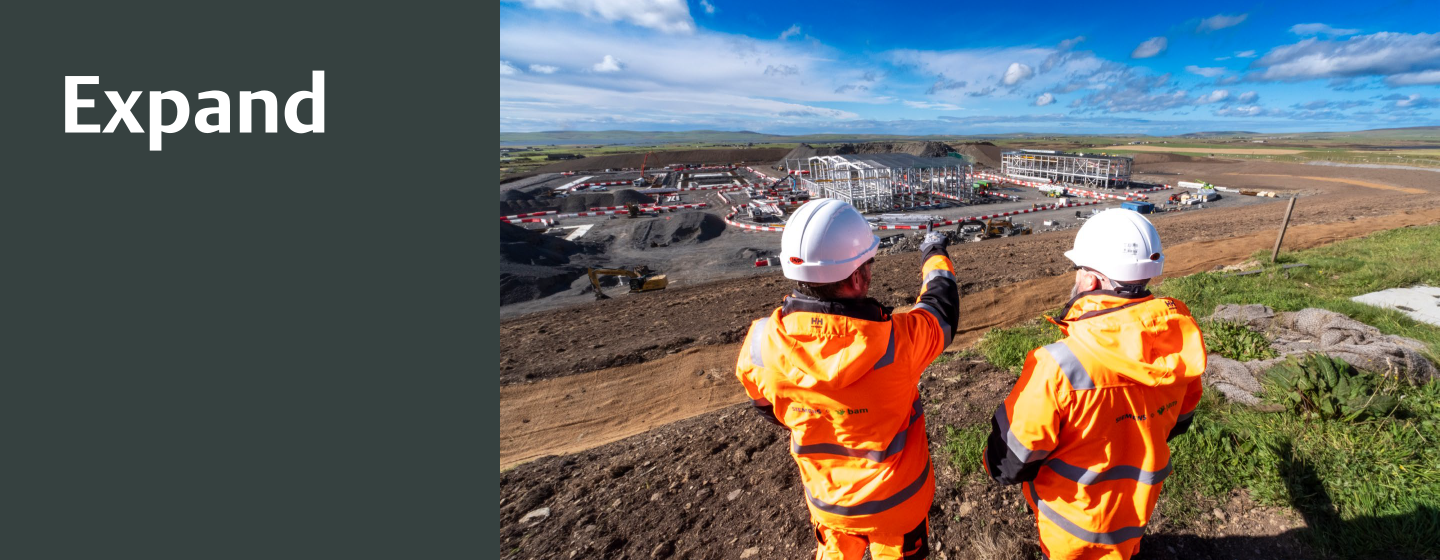
Under Expand 2024-2026, we expand and increase our efforts to capture new opportunities, such as growing in energy markets and renovating and retrofitting.
Expand applies the foundations of Focus and Transform to start the process of building our position and capabilities in high-growth markets that align with our sustainability values. Expand within Strategy 2024-2026 forms a bridge to the next strategy period.
In the Netherlands, Expand involves scaling up our timber- and bio-based industrial housebuilding concept, including leveraging our existing land bank. It also involves growing in home renovations and expanding in power grids and infrastructure solutions, EV infrastructure, inland flood protection, bridge renovations and rail. As part of this, BAM expanded its land bank in 2025. This included the acquisition by BAM subsidiary AM area developers of a 50,000 m² former industrial site in the north of Amsterdam. It was one of the largest acquisitions in the Netherlands in recent years. The intention is to create a vibrant urban district with around 1,600 new homes and space for light industry, offices and hospitality.
In the United Kingdom and Ireland, we see opportunities to transform our role in the energy transition market by diversifying and innovating our capability in grids, electrification and nuclear Small Modular Reactors (SMRs). Rail electrification and related civil works are further areas with potential, as well as energy solutions for non-residential buildings.
A key aspect of expanding our business in the Netherlands and the UK and Ireland will be to increase the degree of divisional cross-selling. We will also further the move to a client-centric key account model, with one BAM for the customer.
Finally, we will consider acquisitions that would allow us to exploit what we already know and do well, or which would accelerate our performance in our product-market combinations.
Our strategic evolution
From broad ambition to focused brilliance
Our 2024-2026 strategy is part of a decade-long transformation (2020-2030) aimed at achieving profitability by creating sustainable value for clients and society. This means prioritising work that aligns with our sustainability objectives and delivers long-term impact. We select profitable projects that fit our strategy, partner closely with clients and encourage collaboration and diverse perspectives. We rethink what we do and how we do it, becoming more digital, more scalable and more sustainable.
Striking the right balance between risk and reward is essential. We make clear portfolio choices and do not tender for work that does not align with our purpose, strategy or financial goals. We typically serve clients with complex needs who value sustainability and long-term performance.
Standing out in a competitive market
In a fragmented industry with tight margins, we do not aim to compete on lowest cost. Given our scale and capabilities, we differentiate through speed, quality, safety, innovation and sustainability — playing to our strengths.
Since 2020, we have taken steps to create a stronger platform for growth: introducing value-based management, strengthening operational excellence, and focusing our activities on the markets in which we can lead. These measures stabilised the business and laid the foundation for our 2024-2026 strategy: Focus, Transform, Expand, a transitional period in which we optimise what has been built while continuing to evolve towards future expansion.
Product-market combinations
A key advancement has been the introduction of product-market combinations (PMCs) across our core regions. PMCs guide our strategic decisions by defining what we do, where we do it and why. We concentrate on sectors that are attractive and aligned with our strengths and avoid those that are not.
Selection criteria include sustainability relevance, market potential, contract models and competitive dynamics. Sustainability is an important factor: when it scores low, we generally step away, unless the strategic potential is high enough to justify engaging clients on the benefits of more sustainable choices.
How we select the right contracts and tenders
Our stage-gate process assesses tenders for financial viability, strategic fit, risk, partnership potential and sustainability alignment, ensuring each project supports our long-term objectives. In addition, we no longer pursue high-risk, one-stage design-and-build projects. Instead, we prioritise framework agreements and a two-stage tendering approach that foster earlier client collaboration, greater design maturity and improved cost and delivery certainty.
Framework agreements
BAM strategically engages in major framework agreements containing individual call-off project orders of up to €400 million, and programmes exceeding €1 billion. Framework agreements set long-term conditions for awarding multiple projects without repeated tendering. Working in this way secures long-term, high-value pipelines, maintains risk control and positions BAM as an industry leader. A further advantage is that it supports early design influence, strengthens our market positioning, reduces bid costs and drives operational efficiency through shared resources. It also ensures risk and sustainability compliance under BAM’s Baseline governance. A framework-led strategy delivers scale, certainty and strategic advantage, allowing BAM to shape future infrastructure while safeguarding profitability and operational excellence.
Two-stage tendering
In addition to framework agreements, BAM operates a two-stage tendering model at project level. The goal here is to deliver complex projects with greater certainty, collaboration and strategic alignment. This approach enables early contractor involvement to influence design, buildability and risk allocation before committing to a fixed price. It is followed by a negotiated final agreement ensuring transparency and compliance with Baseline governance. For clients, this means reduced risk, predictable costs, and improved quality through buildable, sustainable designs shaped by early engagement. The outcome is a proactive, collaborative procurement model that accelerates delivery, safeguards profitability and creates long-term value for all stakeholders.
Property Development Projects
The acquisition and selection of every property development project follows the Property Stage Gate process. This framework ensures that each project is evaluated against key criteria, including its strategic alignment with BAM’s strategy, compatibility with our defined risk appetite and its impact on the overall size and composition of the property investment portfolio. The objective is to avoid disproportionate exposure within the risk profile of the property investment portfolio.
Connecting ambition, strategy and value creation
Our ambition to transition from grey to green runs throughout our strategy and is anchored in our broader purpose: Building a sustainable tomorrow.
Our transformation is designed to strengthen BAM financially, operationally and environmentally. For the 2024-2026 period, we set a strategic target to grow the company beyond €6 billion in revenue per year and to deliver an adjusted EBITDA margin of 4-6%. In 2025, we delivered on both targets. Further financial details can be found in chapter 3.1.
These financial targets go hand in hand with our sustainability ambitions, supported by long-term reductions in our carbon footprint and material use.
In the section about value creation that follows, we outline how our strategy and mission add value for society.