Carbon emissions
The construction sector plays a key role in the transition to a low-carbon society. Recognising this, BAM is committed to reducing direct and indirect carbon emissions and working towards our climate-science-aligned targets. For full details, see chapter 6.3.
Scope 1 and 2
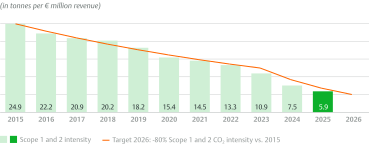
In 2025, we continued to make progress in reducing our Scope 1 and 2 emissions, recording a reduction of 76% compared to 2015 and closing in on our 2026 target of reducing 80%. This was driven mainly by the ongoing electrification of our fleet and equipment, and the use of Hydrotreated Vegetable Oil (HVO). The share of electric vehicles in the BAM lease fleet increased to 82% in 2025 (2024: 66%), however the use of HVO remains necessary if the construction sector is to reduce emissions significantly. While BAM only uses HVO that has been certified as being sustainable, we share the concerns regarding the extent to which it is possible to source biofuel sustainably. We consider the use of HVO only as an intermittent measure, and BAM is actively working to reduce reliance on HVO for CO2 reduction, primarily by electrifying our equipment.
Scope 1 and 2 CO2 emission intensity
Scope 3
BAM is making good progress in tackling our Scope 3 emissions: we are improving our measurement methodology which increases our insights and we are pursuing the reduction of carbon emissions in our value chain. We continue to increase the use of low-carbon concrete, recycled steel, and low-energy asphalt across our projects, and we see a gradual decrease in the energy consumption of the assets we deliver.
BAM’s Scope 3 emissions are 53% lower than in our base year 2019, as presented in the graph. The decrease in our upstream emissions is mainly the result of the update of Exiobase (spend-based) conversion factors. Exiobase carried out a "true-up" in 2025, improving the accuracy of the conversion factors by using more recent data, including more regional differences and reducing the reliance on extrapolation of historical data. BAM has also used the updated conversion factors to restate 2024, full details can be found in chapter 6.3. The reduction in the conversion factors exceeds the progress made in our supply chain in reducing carbon emissions since 2019. Therefore, the decrease in upstream Scope 3 emissions cannot fully be attributed to BAM’s reduction efforts.
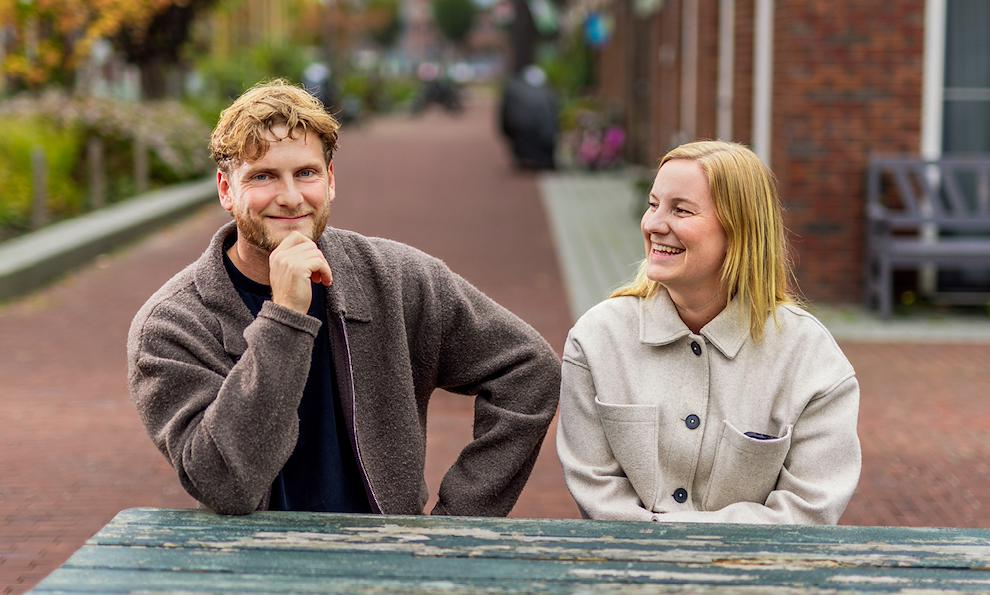
The decrease of our downstream Scope 3 emissions in 2025 compared to 2024 and 2019 is even more noticeable. This decrease is the result of:
-
A decrease in average energy consumption of the assets we deliver
-
Reductions in carbon intensities of the grids in our home countries
-
A lower amount of houses delivered in 2025 compared to previous years
-
Delivery of relatively few large construction projects in 2025
BAM intends to review its Scope 3 targets to make sure the targets remain ambitious and effective. In the meantime, we focus on our efforts to meeting our 2030 target, as we anticipate that we need to compensate for increased emissions due to an uptake of delivered projects and business growth in the coming years, and continue to work towards our net-zero ambition for 2050.
At the same time, we continued strengthening our Scope 3 measurement and reporting capabilities. Although we have made good progress, consistent and reliable value chain data remains a substantial challenge, and our reported Scope 3 emissions are still largely based on spend-based assumptions. Full details on our methodology and assumptions can be found in chapter 6.3.
Reducing our Scope 3 emissions remains a key priority within our broader sustainability strategy, with multiple reduction initiatives currently being developed and implemented across the organisation. To ensure that new projects are systematically evaluated based on their contribution to our decarbonisation objectives, we have embedded additional sustainability-focused questions into our stage-gate process. In 2025, we finalised a set of thresholds for consideration during tenders addressing both upstream and downstream Scope 3 impacts associated with the assets we construct. Tender teams will have to show how they meet these thresholds applying a comply-or-explain principle to ensure transparency and accountability.
These thresholds will be reviewed and updated on an annual basis to reflect evolving market conditions, increased insights, and progress in our decarbonisation efforts. This will enable us to proactively influence project-related impacts at an early stage, well before contractual commitments are finalised.
Scope 3 CO2 emissions
Advancing low-carbon construction: EV charging hub on the Maasvlakte
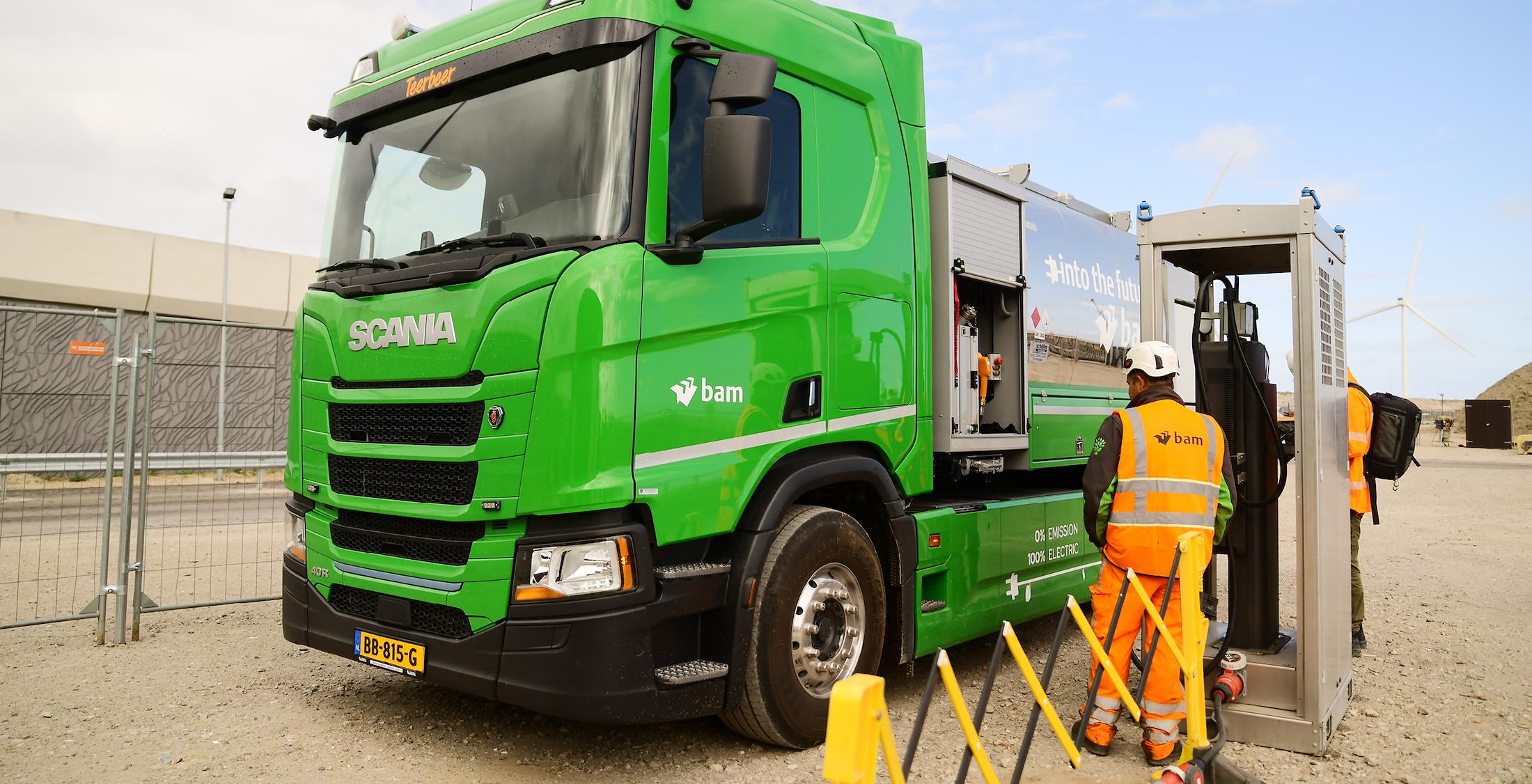
BAM is addressing challenges such as grid congestion and nitrogen regulations by developing new ways to deliver projects. For example, through a shared commitment to low-carbon construction, we are working closely with our client to realise the first emission-free charging station on the Maasvlakte site.
The first emission-free charging station for a civil project of this scale was developed in collaboration with the client. In particular, they actively contributed to, and assisted in, securing the power connection - a process that typically takes months. The site employed emission-free cranes, excavators, and asphalt kits, demonstrating the practical application of zero-emission technology in large-scale civil engineering. Having an on-site charging hub for equipment supports process optimisation and greater operational flexibility.
In 2025, CDP named BAM in its Climate A list for the seventh consecutive year, reflecting our consistent leadership in climate transparency and action.
Circularity
BAM aims to deliver circular projects by maximising resource efficiency and minimising waste. BAM believes circular strategies to be essential to achieving our Scope 3 reduction because they directly reduce the need for carbon-intensive raw materials. Our approach to circularity comprises three main elements:
-
Applying circularity tools to stimulate the transition to a more circular economy.
-
Reducing the use of virgin materials by reusing, recycling, and considering alternative materials.
-
Reducing waste.
Circularity tools
BAM offers clients two main circularity tools when design falls within a project’s scope. The first is circularity assessments, which provide insights into the use of recycled and reusable materials. The second is material passports, which ensure materials retain their value for re-use or recycling. In 2025, we offered circularity assessments and material passports in 69% of our large tenders with design in scope, almost meeting our target of 75% in 2026 already. While we currently offer both tooling options equally, we are seeing greater client interest in circularity assessments than in material passports. Therefore, we have decided to prioritise the use of circularity assessments in projects that include design and have adjusted our 2030 target accordingly. Material passports will remain available as an option for clients who specifically request them.
Virgin materials
We aim to reduce BAM’s use of non-bio-based virgin materials, replacing them with alternatives that both align with circular economy principles and drive down our upstream Scope 3 emissions. In this, BAM focuses on the key materials of concrete, steel, asphalt, and timber. Our efforts to reduce primary materials also directly contribute to our Scope 3 target for CO2 reduction.
In 2025, division Netherlands formed cross-segment working groups to update the roadmap for each material. Division United Kingdom and Ireland investigated the volume of virgin materials used compared to recycled and bio-based materials, working with suppliers to improve data collection and establish a baseline against which we will measure future progress.
Waste reduction
We made further progress on construction and office waste intensity in 2025. We are aiming for a 75% reduction by 2030 compared to 2015. By the end of the year, we had achieved a 65% reduction, and are well on track to meeting our target. However, as all obvious measures to reduce waste have already been implemented, going even further will become increasingly challenging. Currently, we are paying specific attention to tackling spikes in waste volumes during the demobilisation phase of projects, and have launched a pilot scheme for fire-protection boards made from timber waste.
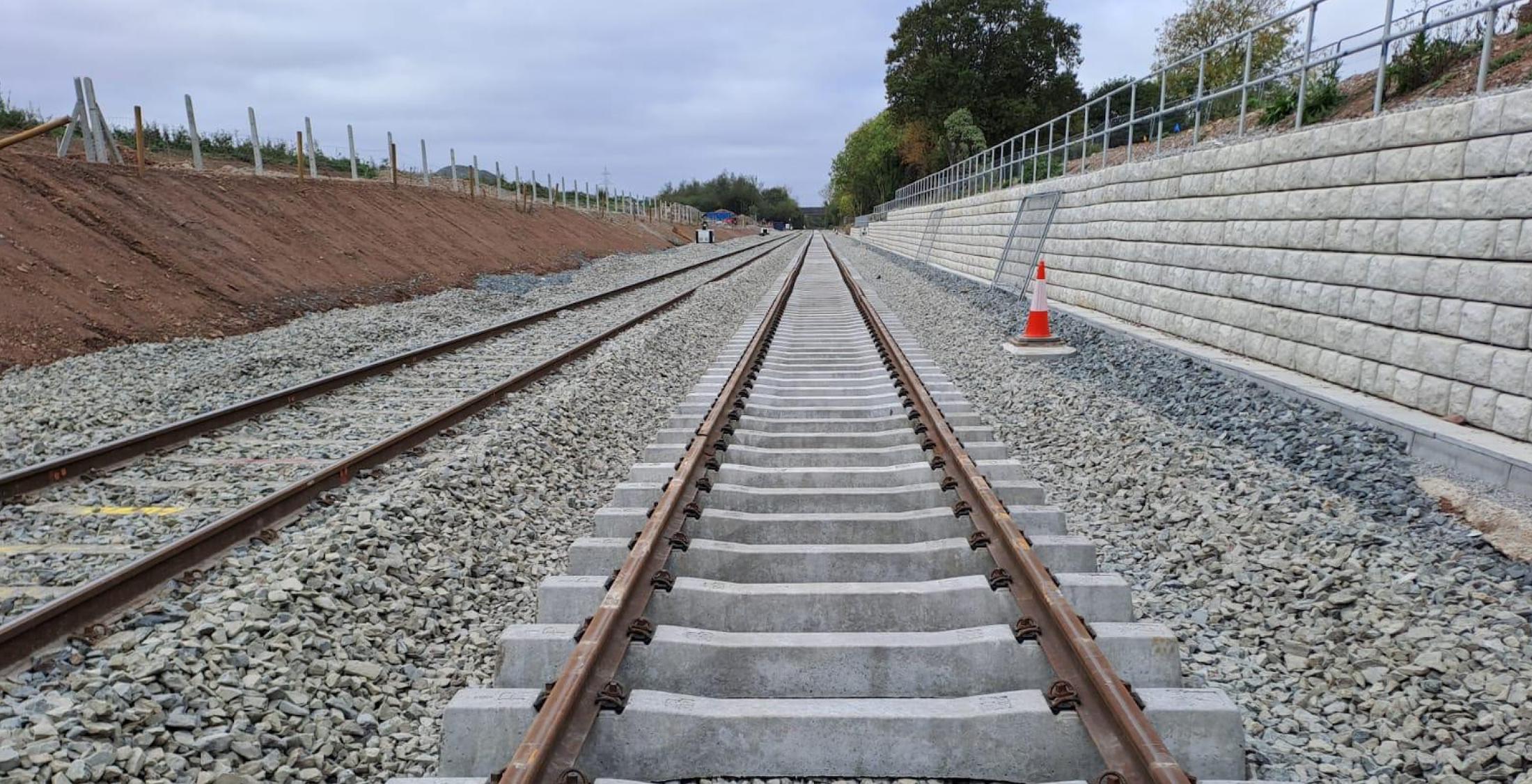
Innovative engineering for impact: Cork area commuter rail
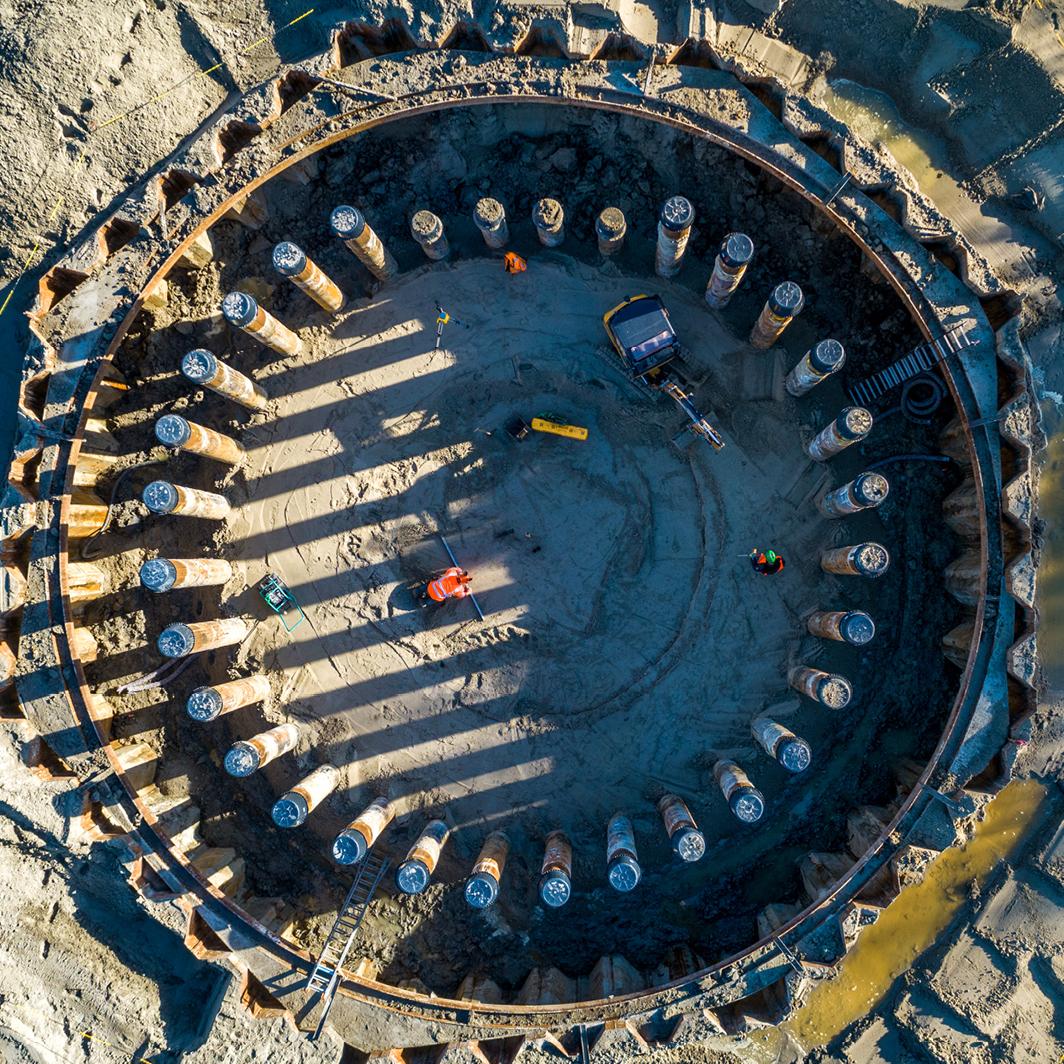
On this flagship project, BAM Ireland has delivered innovative solutions that significantly reduce environmental impact while improving efficiency and safety. By redesigning the original steel retaining wall into a modular pre-cast system, we reduced reliance on virgin materials, achieving an approximate 97% carbon reduction. In total, 41,300 tonnes of CO2 were saved across all the innovations involved in realising the Cork rail project.
Advanced digital tooling enabled precise planning, improved efficiency, and enhanced performance reporting throughout the project. This approach also brought multiple operational benefits, including:
-
Reduced on-site complexity and lower concrete related risks
-
Improved logistics and faster installation
-
Major reduction in noise, vibration, and safety hazards
The project demonstrates how BAM combines innovation, sustainability, and operational excellence to deliver large-scale infrastructure in a low-carbon, efficient, and safe manner.
Climate adaptation
Our climate adaptation efforts are designed to strengthen the climate resilience of the built environment. BAM aims to deliver assets that can withstand severe climate and weather events, such as heavy precipitation, drought, and rising sea levels, meeting the increasing demand for climate-adaptive solutions from clients, communities, and regulators.
By the end of the year, we had embedded climate risk scans into our standard project approach across BAM’s divisions. In 89% of large tenders in which design was in scope, climate-adaptive measures were part of our offering. This puts us in a good position to deliver on our 2026 target of offering climate-adaptive measures in all large tenders in which design is in scope, and to work towards ensuring that climate-adaptive measures, where relevant, are implemented in our projects by 2030.
Water, as a topic, is receiving increasing attention within BAM and among our stakeholders. Some water-related topics, such as drought, flooding, and water stress due to extreme precipitation already form part of our climate-risk scan. An element that is not yet part of our sustainability strategy is the availability of freshwater. We are planning to assess this topic in 2026 and explore whether freshwater availability needs to be made an explicit part of our strategy.
Nature
Biodiversity loss is increasingly recognised as being a severe threat to our planet, society, and economy, all of which depend on healthy and resilient natural ecosystems. Moreover, addressing biodiversity loss and safeguarding nature are intrinsically linked with mitigating the impacts of climate change. Guided by policy developments and client demand, BAM now refers to this theme under the name ‘nature’.
BAM increasingly engages in undertaking measures designed to reduce the negative impact on nature and have a positive impact on nature where possible. In 2025, we specified our nature ambition and defined three focus areas: 1) minimising our supply chain’s negative impacts on nature; 2) protecting nature during construction; 3) restoring and enhancing nature through the assets we deliver.
We continued to roll out the Biodiversity+ assessment in 2025. Developed by BAM, Biodiversity+ is a tool to measure biodiversity impact and address the five key drivers of biodiversity: habitat creation, sustainable resourcing, carbon reduction, pollution avoidance, and biosecurity. In 2025, we conducted 79 assessments; 62 in the UK and 17 in the Netherlands. The assessments provide valuable insights into the risks, opportunities, and measures already implemented across our projects. Some key takeaways of the assessed projects are:
-
49% of the projects implement measures to prevent or mitigate light pollution
-
65% of the projects adopt a resources strategy covering key materials and components highlighting the potential indirect impact on biodiversity
-
43% of the projects adhere to good biosecurity practices on site, preventing the spread of Invasive Non Native Species, diseases or parasites.
The outcomes for the biodiversity+ assessments also show limited implementation of carbon sequestration in habitats and landscape design. This presents an opportunity to raise awareness of the role of carbon-rich habitats, such as wetlands, peatlands and mature woodlands, and to encourage ecologists to identify and monitor long-term sequestration opportunities, particularly on projects with significant habitat creation.
At BAM, we are reimagining the built environment as a place where nature is not compromised but championed, and our partnership with the Eden Project