6.4 Social information
Own workforce (ESRS S1)
BAM aims to have a positive impact on all employees working at the company by building an inclusive environment in which everyone feels safe, welcome and respected, and ensuring equal opportunities for people regardless of sex and gender identity, age, ethnicity, disability or other characteristics.
Promoting fairness and reducing discrimination fosters higher levels of employee engagement within BAM. Practicing non-discrimination has a positive impact on employees as it can ensure fair treatment and opportunities for every individual, regardless of identity. It also positively impacts the communities in which BAM operates by ensuring the company's projects reflect the diverse needs and values of society. Focus on gender diversity positively impacts the representation of women in leadership positions in the sector.
BAM positively impacts its own employees and contributes to a safe, sustainable and just society by offering every employee the opportunity to grow their skills with unparalleled learning opportunities. This positively impacts every individual by ensuring they can build sustainable careers through constructive performance evaluations and development opportunities. By levelling-up its employees, BAM stays at the forefront of innovation, sustainability and safety. This can have a positive impact on the natural environment by enabling employees to implement more sustainable practices where they live and work.
BAM’s values (Sustainable, Inclusive, Reliable, Ownership and Collaborative) form the basis of its corporate culture. The positive impact of BAM’s corporate culture includes commitment to living these values in its daily practices, to ethical and sustainable business practices, and to enhanced reputation.
Working in the construction sector in general has a negative impact on occupational health and safety, as attested to by the existence of work-related injuries resulting in death and days away from work for those in the industry who work on building sites, for example. Working in the construction industry can expose workers to a variety of hazards that can cause long-term health effects.
Disclosures are related to the following material impacts, risks and opportunities, as identified through BAM’s double materiality assessment process. For the full details see chapter 6.1.
|
Material impact, risk or opportunity |
||
|
Equal treatment and opportunities |
||
|
Diversity |
(OE) |
Positive impact |
|
Return on inclusion |
(OE) |
Positive impact |
|
Training and skills development |
(OE) |
Positive impact |
|
Occupational health and safety |
||
|
Occupational health and safety |
(OW) |
Negative impact |
|
Work-related ill health long term effect |
(OE) |
Negative impact |
The disclosures in this section should be read in conjunction with the disclosures in chapter 6.2 on Governance, Strategy, and Impact, risk and opportunity management. Further disclosures incorporated by reference are:
|
Disclosure requirement |
Reference to other chapters in the 2025 Annual report |
|
ESRS Standards: General disclosure (ESRS 2) |
|
|
SBM-3 |
Description of the key elements of BAM’s strategy that relate to or impact sustainability matters, as well as a description of the key elements of BAM’s business model and the resilience of BAM’s strategy and business model regarding its capacity to address its impacts, risks and opportunities in chapter 2.5 How we create value for society. |
Interests and views of stakeholders (SBM-2)
BAM’s own workforce is a key group of affected stakeholders. BAM integrates the interests, views and rights of its employees into its strategy and business model by maintaining structured employee engagement channels, regular surveys and feedback sessions.
The company actively involves its own employees in strategy setting and, for example, risk assessment processes. Through its Works Councils, with representatives from across the business, BAM involves its own employees in discussions about organisational changes and other employee-related matters.
Material impacts, risks and opportunities and the interaction with the strategy and business model (SBM-3)
All material impacts with regard to the own workforce (refer to table 'Own Workforce' and chapter 6.1) are closely connected to BAM’s strategy and business model. Examples include the impacts related to occupational health and safety and to training and skills development. The defined strategy, policies and underlying actions and measures are designed to manage and inform management on progress, and results are taken into account when adapting the business model.
Any impacts on BAM's own workforce that arise from transition plans to reduce negative impacts on the environment and to achieve greener and climate-neutral operations are not considered material, although opportunities do arise from job creation and reskilling and upskilling, such as in those related to further developing BAM’s timber housing concept.
Policies related to own workforce (S1-1)
BAM’s policies to manage its material impacts on its own workforce aimto identify, assess, manage and/or remediate the negative impacts and contribute to increase the positive impacts.
The company's diversity and inclusion policy states that it will create a truly inclusive culture that is mirrored throughout all aspects of its business, infrastructure, supply chain and technology. Inclusion refers to the organisation’s ability to create a culture in which every employee feels valued and respected, ensuring equal opportunities for employees regardless of their identity and diversity traits. Diversity concerns all aspects and personal characteristics in which people may differ, including sex and gender identity, age, ethnicity, disability and sexual orientation.
BAM is committed to putting its employees’ health (including mental health) and wellbeing at the heart of its approach and creating a psychologically safe environment for its employees to do their best work. The company measures the pay gap and removes any bias from its compensation and reward strategies by, for example, implementing a harmonised job grading framework. BAM will not tolerate discrimination, bullying and/or harassment and encourages employees to speak up where this is witnessed, experienced or reported.
The company's health and safety policy states that it regards the health, safety and welfare of its own workforce to be of the utmost importance and essential to the successful running of the business. BAM will do everything in its power to comply with all relevant legislation and provide adequate finances and time to develop the culture. Safety is also an important element in BAM’s sustainability policy. This states that unsafe behaviour must be addressed, and unsafe working conditions reported to the compliance manager or (anonymously) via the Speak Up process. All safety incidents shall be reported in line with instructions. Safety instructions apply to all BAM employees and all non-employees working on a site managed by BAM.
BAM is committed to ensuring that its employees have the knowledge and skills to do their best work, and that its training provision is inclusive and accessible to all. BAM’s HR Perform & Develop policy clarifies the process by which managers of BAM work together with employees to plan and review their performance and development and their overall contribution to BAM’s success. The policy helps to identify individual talents and strengths and helps employees reach their full potential. BAM wants to ensure a fair and consistent approach to how employees are recognised and rewarded for their team and individual contributions. BAM recognises and develops the talents of all employees in the organisation. The company wants to create a learning culture and growth mindset, and provide opportunities for all employees to fully develop and apply their talents.
Human rights is treated as an overarching theme, covering all topics mentioned above. The different policies address safety, health and inclusion, and social value, outlining clear requirements. The code of conduct describes the way BAM respects human rights and what it expects from employees in that respect. In the diversity and inclusion policy, BAM further outlines its norms and values on diversity and inclusion. Supported by these policies, BAM is protecting and upholding human rights to build strong and inclusive communities. BAM has strengthened its approach to this topic by issuing Group-wide guidance on human rights.
In strengthening human rights’ policies and procedures, BAM is guided by the standards established in the Universal Declaration of Human Rights, the Corporate Responsibility to Respect Human Rights under the UN Guiding Principles on Business and Human Rights, and the OECD Guidelines for Multinational Enterprises. BAM also recognises and respects the ILO Declaration on Fundamental Principles and Rights at Work, the ILO Conventions in force and the ILO Tripartite Declaration of Principles concerning multinational enterprises and social policy (MNE declaration). BAM complies with the Minimum Safeguards from the EU Taxonomy. BAM aligns with these standards and demonstrates this in its code of conduct, vendor code of conduct, human rights guideline and other underlying policies, such as its sustainability policy and procurement policy. For Human Rights Due Diligence, BAM performed a deep dive risk analysis on potential Human Rights Risks to understand and mitigate the human rights risks within the company's own workforce and vendors (suppliers and subcontractors).
In its approach, BAM focuses on efforts and actions to mitigate human rights risks in the following areas:
-
Continuous assessment of human rights risks;
-
Performing third-party risks due diligence;
-
Training and engaging BAM employees and vendors;
-
Industry engagement;
-
Monitoring incidents and complaints handling.
We closely monitor training participation by gender to ensure equal access to development across our company. Differences in average training hours between men and women are driven primarily by role profiles and mandatory training requirements linked to those roles, rather than unequal access to learning. To ensure fairness, all employees have equal access to learning resources, including StudyTube and personalised development planning, with 96% of employees completing the People & Development section of our performance cycle. We also proactively monitor participation in formal development programmes to identify and address potential blind spots in nominations, ensuring opportunities are distributed equitably and aligned to company needs.
Processes for engaging with own workforce and workers’ representatives about impacts (S1-2)
Under the responsibility of the CHRO, BAM conducts an engagement survey of its own employees three times per year. Managers have access to the anonymised scores and feedback from their team. They are encouraged to discuss the results and take action with their team to address the concerns or opportunities that are raised. The results of the survey are reported to the Executive Committee. Scores are compared to previous surveys and against external benchmarks to measure the effectiveness of the actions being taken. Informal interactions between non-employees and project managers about, for example, occupational health and safety impacts, do take place at sites.
Processes to remediate negative impacts and channels for own workforce to raise concerns (S1-3)
BAM's Speak Up procedure describes how the workforce and other stakeholders can raise their concerns and describes the process of how reports will be addressed. There is also an external Speak Up service, at www.speakupfeedback.eu/web/bam. This is available 24 hours a day, seven days a week. BAM has an official investigation procedure in place that describes if and how reported incidents will be investigated and followed up. Although BAM does not systematically assesses awareness and trust in these mechanisms, awareness about BAM’s Speak Up process is raised and people are invited to voice concerns.
The same procedure applies for specific negative impacts on safety, in addition to the official safety incident registration procedure. BAM has standards across the business for the reporting of incidents, investigation procedures and instructions, depending on the nature of the incident. For example, the composition of investigation teams depends on the severity of the incident, but consists of, at a minimum, a health and safety professional. Depending on the nature of the incident, specialist assistance can be sought by the investigating team. This can be internal or external. Communication, corrective actions and the prevention of recurrences of significant incidents are the responsibility of BAM’s directors of Occupational Health and Safety.
BAM’s code of conduct calls on BAM’s workforce to never put health and safety aside to get a job done, and to stop an activity that is unsafe or could result in an unsafe situation. Employees, non-employees and other (external) parties can report environmental, health and safety issues to their line manager or compliance officer, or via the Speak Up process. Workers are protected against reprisals because reports can be made to the compliance officer outside the project team or anonymously (if desired) via the Speak Up process. Following the code of conduct, retaliation – whether direct or indirect – against employees who raise a concern may result in disciplinary action up to and including dismissal.
Action-taking on material impacts on own workforce, approaches to managing material risks and the effectiveness of those actions (S1-4)
The BAM Experience (chapter 2.6) aims to offer all employees an attractive employee experience that is tailored to their needs. Dedicated centres of excellence are working on a daily basis to deliver the BAM Experience. These centres of excellence cover the areas of talent acquisition, talent management and learning, diversity and inclusion and compensation and benefits.
Progress and actions taken in these areas in 2025 include, but are not limited to, completing the rollout of strategic workforce planning across the business and translating the insights to a prioritised set of interventions to address key challenges, upskilling recruiters and hiring managers in inclusive recruitment, strengthening talent dialogues and succession pipelines, and launching the conscious leadership journey to drive cultural and behavioural change. The themes that will be focused on in 2026 include, but are not limited to, attracting more graduates to early career roles, increasing internal mobility, managing attrition, upskilling managers in driving development conversations and streamlining the learning curriculum to conscious leadership.
The effectiveness of these initiatives is assessed and tracked via the employee engagement survey (see S1-2) and the strategic people metrics (see S1-5).
Over the past year, we advanced our occupational health and safety performance through several key initiatives. We launched a Group‑wide safety programme, forming the basis for BAM’s six Life Saving Rules, eight Safety Principles and Group Safety Standards. In addition, we strengthened our safety reporting, management and investigation systems across the organisation. We also introduced a mandatory e‑learning course for all employees and developed ‘toolbox talks’ to support our on‑site operatives in working safely every day.
To address long‑term work‑related ill health, we offered webinars through the Vitality House and delivered sessions within the Safe and Well programme, covering themes such as work–life balance and mental health.
Targets related to managing material negative impacts and advancing positive impacts (S1-5)
BAM has defined strategic people metrics to manage its material impacts on BAM’s own workforce. Several metrics, such as turnover, absenteeism and action-taking, are tracked internally with no specific targets. These metrics are forecast, based on trends, to gain insight into the effectiveness of actions taken, and to ensure BAM remains within expected parameters and can identify when it goes out of the normal range. These metrics are reported to the Executive Committee on a quarterly basis in the management report. Following the interim year of 2025, the company is entering the next phase of targeted objectives scheduled for 2026 and 2030 (chapter 3.2).
Characteristics of BAM’s employees (S1-6)
Insights into the general characteristics of the employees in BAM’s own workforce provide contextual information that aids an understanding of the information reported in other disclosures in this chapter. It assists in providing insight into BAM’s approach to employment, including the scope and nature of impacts arising from BAM’s employment practices. BAM recognises the importance of extending its strategy to its workforce and knows that data optimisation is required to do so effectively. The data presented in this chapter is used to further manage the social performance of BAM.
The total number of employees is 14,167 as at 31 December 2025. The geographic distribution of employees is included to show regional differences within the workforce. A breakdown by genders is provided as part of BAM’s diversity disclosures. The breakdown by contract type provides insight into the structure of the company's workforce. The information reported in these tables is correlated to the personnel expenses, as reported in note 7 in the financial statements.
Reporting principles and assumptions - own workforce
BAM’s own workforce includes both people who are in an employment relationship with the undertaking (‘employees’) and non-employees who are either people with contracts with BAM to supply labour and people provided by subcontractors primarily engaged in employment activities. The last category also includes all workers on BAM-led construction sites. The information disclosed with regard to non-employees does not affect their status with regard to applicable labour law. The disclosures do not cover other workers in the value chain.
Own employees are active BAM employees with an employment relationship. A BAM employment contract is defined as an employment agreement with a BAM subsidiary. For example:
-
Regular employees (operative hourly, operative salaried, staff salaried, staff hourly)
-
Trainees (including apprentices, graduates)
-
Persons on Global Assignment to other BAM entities (home record)
Non-employees are personnel working for a BAM subsidiary or joint arrangement and directly supervised by BAM but not under a BAM employment contract , for example:
-
Students (Internship)
-
Contingent Workers, such as individuals leased from agencies (agency workers), self-employed persons (independent contractors)
-
Subcontractors supervised by BAM
BAM has scoped its reporting boundaries related to the own workforce to the extent that subcontractors who are working on a BAM-managed site (directly supervised by BAM) and subcontractors working for BAM’s joint operation partners or joint venture partners are not taken into account for the reporting in own workforce.
Tier-N vendors (indirect suppliers) and non-contracted individuals (i.e., site inspectors) are not part of BAM’s own workforce. Members of the public, e.g. visitors, bystanders and other road users, are thirds and not included in the reported numbers, unless explicitly mentioned.
BAM uses a single cross-divisional core HR system that supports most HR processes and reports using standardised data. In addition, BAM has implemented a reporting solution that offers internationally recognised standard metrics and allows multiple data sources to be integrated for strategic HR reporting and people analytics. Concerning the information provided in this chapter, percentages are calculated based on headcount, and the absolute numbers given represent headcount unless explicitly stated otherwise. Numbers for employee-related disclosure requirements are derived from this system.
BAM’s definition of Senior Leadership Group includes non-employees in a management role in Belgium, despite the fact that these people do not have an employment contract as described above. The Senior Leadership Group is defined as all employees in senior job grades, referred to as grades F, G and H in BAM’s salary framework.
Numbers reported for non-employees are derived from the calculations used for reporting hours worked in relation to safety performance. This includes assumptions and estimates. Refer to the accounting principles for safety worked hours for further details.
Own employees
|
(in headcount, as per 31 December 2025) |
2024 |
2025 |
|
Division Netherlands |
6,819 |
7,019 |
|
Division United Kingdom and Ireland |
6,654 |
6,845 |
|
Other |
298 |
303 |
|
13,771 |
14,167 |
Employee turnover
|
2024 |
2025 |
|
|
Number of leavers |
2,123 |
2,109 |
|
Turnover rate (%) |
15.5 |
15.1 |
Contract types by gender
|
2025 |
||||
|
(in headcount, as per 31 December 2025) |
Division Netherlands |
Division |
Other |
Grand Total |
|
Permanent |
6,547 |
6,626 |
277 |
13,450 |
|
Female |
1,129 |
1,768 |
80 |
2,977 |
|
Non-female |
5,418 |
4,858 |
187 |
10,463 |
|
Temporary |
417 |
90 |
26 |
533 |
|
Female |
94 |
36 |
13 |
143 |
|
Non-female |
323 |
54 |
13 |
390 |
|
Non-guaranteed hours |
0 |
81 |
0 |
81 |
|
Female |
0 |
32 |
0 |
32 |
|
Non-female |
0 |
49 |
0 |
49 |
|
Other |
55 |
48 |
0 |
103 |
|
Female |
1 |
10 |
0 |
11 |
|
Non-female |
54 |
28 |
0 |
82 |
|
Totals |
7,019 |
6,845 |
303 |
14,167 |
|
2024 |
||||
|
(in headcount, as per 31 December 2024) |
Division Netherlands |
Division |
Other |
Grand Total |
|
Permanent |
6,462 |
6,282 |
276 |
13,020 |
|
Female |
1,068 |
1,666 |
76 |
2,810 |
|
Non-female |
5,394 |
4,616 |
200 |
10,210 |
|
Temporary |
313 |
70 |
22 |
405 |
|
Female |
78 |
32 |
12 |
122 |
|
Non-female |
235 |
38 |
10 |
283 |
|
Non-guaranteed hours |
0 |
105 |
0 |
105 |
|
Female |
0 |
38 |
0 |
38 |
|
Non-female |
0 |
67 |
0 |
67 |
|
Other |
44 |
197 |
0 |
241 |
|
Female |
2 |
39 |
0 |
41 |
|
Non-female |
42 |
158 |
0 |
200 |
|
Totals |
6,819 |
6,654 |
298 |
13,771 |
Characteristics of BAM’s non-employees (S1-7)
BAM relies for a large part of its construction activities on non-employees as part of the workforce. Subcontracted work (including material purchase) represents around 70% of BAM’s cost base. Refer also to the details in the financial statements.
As at 31 December 2025, BAM’s own workforce consisted of 69% non-employees (2024: 67%), a total of 31,662 (2024: 27,919).
Own workforce including non-employees
|
2024 |
2025 |
|||||
|
(in headcount) |
Employees |
Non-employees |
Own workforce |
Employees |
Non-employees |
Own workforce |
|
Division Netherlands |
6,819 |
11,446 |
18,265 |
7,019 |
13,506 |
20,525 |
|
Division United Kingdom and Ireland |
6,654 |
16,164 |
22,818 |
6,845 |
17,748 |
24,593 |
|
Other |
298 |
309 |
607 |
303 |
408 |
711 |
|
total |
13,771 |
27,919 |
41,690 |
14,167 |
31,662 |
45,829 |
Diversity metrics (S1-9)
BAM strongly believes that different backgrounds, cultures and experiences enhance the business, drive innovation and lead to sustainable growth. Gender diversity at all levels is one driver of this. In 2025, female representation was 22% across the Group. In division, Netherlands female representation was 17%; in division United Kingdom and Ireland, female representation was 27%.
Distribution of employees
|
2024 |
2025 |
|||
|
(in %) |
Female |
Non-female |
Female |
Non-female |
|
Division Netherlands |
17 |
83 |
17 |
83 |
|
Division United Kingdom and Ireland |
27 |
73 |
27 |
73 |
|
Other |
30 |
70 |
31 |
69 |
|
Total |
22 |
78 |
22 |
78 |
Representation in management
|
2024 |
2025 |
|||
|
(in %) |
Female |
Non-female |
Female |
Non-female |
|
Supervisory Board |
43 |
57 |
50 |
50 |
|
Executive Committee |
40 |
60 |
40 |
60 |
|
Senior Leadership Group |
16 |
84 |
20 |
80 |
The representation of women on the Supervisory Board stands at 50% (2024: 43%), the Executive Committee at 40% (2024: 40%) and the Senior Leadership Group at 20% (representing 29 women) (2024: 16% representing 23 women). For the definition of the Senior Leadership Group, reference is made to chapter 3.2.
Initiatives taken to drive gender diversity at all levels include a continued focus on inclusive recruitment, resulting in 3% more women within BAM since 2021, and inclusive development, resulting in 5% more women in manager positions. To increase gender representation in senior leadership, BAM continues to focus on initiatives to retain all talent. This is achieved through the BAM Experience and by increasing BAM’s inclusive culture. Now and in the future, BAM anticipates that this development will increase the number of women in succession planning and in senior roles.
Training and skills development metrics (S1-13)
Engagement in regular performance reviews
|
(in %) |
Employees |
Female |
Non-female |
|
Division Netherlands |
97 |
95 |
98 |
|
Division United Kingdom and Ireland |
96 |
96 |
95 |
|
Other |
99 |
97 |
100 |
|
Total |
96 |
96 |
97 |
In 2025, we continued to strengthen a consistent and disciplined performance-management culture across BAM. Over the past year, 96% of our employees set clear annual goals, an increase from 90% in 2024. This progress reflects a maturing performance approach supported by established processes and policies, strengthened leadership ownership, and a more disciplined performance rhythm across teams. It also demonstrates our employees' mindset of commitment to contributing to BAM’s strategic objectives with clarity and purpose. The goal-setting not only focuses on performance but also on career-development planning across BAM. High-quality development goals are now more firmly embedded in our talent management practices, and enhanced conversations between leaders and employees are supported by practical toolkits. These efforts are helping us to build future-ready capabilities, strengthen succession pipelines and ensure meaningful follow-up on feedback. Strengthening development planning will remain a priority in the years ahead as we continue embedding a culture of continuous learning, growth and performance excellence.
Average training hours
|
All employees |
Female |
Non-female |
|
|
Division Netherlands |
21 |
19 |
22 |
|
Division United Kingdom and Ireland |
24 |
16 |
27 |
|
Other |
16 |
15 |
17 |
|
Total |
22 |
17 |
24 |
Occupational health and safety metrics (S1-14)
BAM measures safety performance through a combination of lagging and leading indicators, with increasing emphasis on monitoring and preventative actions and behaviours. Skills, training, leadership awareness and a proactive safety culture are key to ensuring greater engagement and safer worksites.
BAM measures and monitors safety performance through the incident frequency and the number of incidents, with the intent of continuous improvement. Incident frequency denotes the number of occupational accidents resulting in lost time (absence from work ≥1 day) per million hours worked. BAM measures incident frequency for its own employees (IF BAM) and for its own workforce, i.e. own employees plus subcontractors (IF Total). These metrics are company specific and are based on industry practices. Industry practice is to not include 'no lost time' incidents in the calculation of IF. In addition, BAM discloses the safety information as required by ESRS S1-14. For more information, refer to table 61.
Over the past year, we advanced our occupational health and safety performance through several key initiatives. We launched a group‑wide safety programme, forming the basis for BAM’s six Life Saving Rules, eight Safety Principles and Group Safety Standards. In addition, we strengthened our safety reporting, management and investigation systems across the organisation. We also introduced a mandatory e‑learning course for all employees and developed ‘toolbox talks’ to support our on‑site operatives in working safely every day. We see safety performance (incident frequency, number of incidents and total number of lost days) improving compared to 2024.
BAM seeks to secure the highest standards of health and safety, irrespective of the standards imposed by any legal framework. All subsidiaries of BAM comply with the ISO 45001:2018 standard for occupational health and safety management systems. All employees and non-employees in BAM’s own workforce are covered by BAM’s safety management system.
Company specific metric - Incident Frequency (IF)
|
2024 |
2025 |
|
|
Company specific metrics - Incident Frequency (IF) |
||
|
IF BAM (own employees) (x 1 million worked hours) |
2.9 |
2.7 |
|
IF Total (own workforce, including non-employees) (x 1 million worked hours) |
2.9 |
2.5 |
|
ESRS S1-14 metrics |
||
|
Number of lost lives as a result of work-related injuries (own workforce) |
2 |
- |
|
Number of recordable work-related accidents (own workforce) - with lost time |
215 |
193 |
|
Number of recordable work-related accidents (own workforce) - without lost time |
11 |
5 |
|
Rate of recordable work-related accidents (own workforce) - with and without lost time |
3.1 |
2.5 |
|
(x 1 million worked hours) |
||
|
Number of days lost to work-related injuries and lost lives from work-related accidents |
2,117 |
1,938 |
|
(own employees) |
||
|
Coverage of health and safety management system (in %) |
100 |
100 |
Working in the construction industry can also expose workers to a variety of hazards that can cause long-term health effects. A case of work-related ill health is any illness caused or aggravated by workplace conditions arising primarily from exposure at work to a physical, organisational, chemical or biological risk factor or to a combination of these factors. These are mental and physical health issues that do not stem from an acute event, such as a work-related accident leading to injury. These health complaints typically manifest after a prolonged exposure to an agent or emerge over an extended period, as seen in diseases that may surface years after exposure.
Reporting principles and assumptions safety
Safety performance at BAM is measured using the company specific incident frequency (IF) indicator. The IF indicator denotes the number of work-related injuries resulting in lost time (absence from work ≥ 1 day) per million hours worked, independent of the severity of the injury. The overall incident frequency (IF) indicator comprises two categories:
-
IF BAM: Incident frequency for BAM employees on BAM sites;
-
IF Total: Incident frequency including non-employees, i.e. all people working on sites managed by BAM (BAM employees, self-employed people and subcontractors’ employees).
In addition, BAM reports on S1-14 required metrics. These metrics relate to the number of recordable work-related accidents with lost time and without lost time. The latter is not part of the company specific calculations BAM uses for IF BAM and IF Total. The definitions in ESRS S1-14 result in the calculation of the rate of recordable work-related accidents (own workforce) including incidents with and without lost time. BAM also reports the number of days lost to work-related injuries and lost lives from work-related accidents of its own employees.
Reportable injuries are based on actual occurrences and are never extrapolated or estimated. Despite all measures and an open safety culture, there is an inherent risk of incomplete incident reporting. BAM is in this respect also dependent on information provided by subcontractors and the person involved in the incident. Work-related incidents and hazardous situations are reported via the incident reporting processes in the business, including high-potential near-misses and dangerous occurrences.
Serious work-related incidents without lost time are also reported as part of the definition under ESRS S1-14. BAM records no-lost-time incidents as serious if the incidents relate to traumatic brain injuries, spinal cord injuries, severe fractures (except for fingers, thumbs and toes), internal injuries, severe burns and major soft-tissue injuries, in line with industry guidance from the Health and Safety Executive (HSE), the United Kingdom's national regulator for workplace health and safety, and the Occupational Health and Safety Administration (OHSA).
The worked hours used in the IF calculation are measured, calculated or estimated. Division United Kingdom and Ireland collects the hours of non-BAM employees in three ways: (1) data collected from the pass used to enter and exit a construction site, (2) hours indicated by the subcontractor, (3) headcount by, for example, the project lead on the project site. Where necessary, the assumption is made that a workday is 8 or 9 exposure hours. In division Netherlands, own employees and hired individuals write their hours worked in BAM’s systems. Some of the hours can be calculated based on spend, where a set fee is paid, such as for a machine with operator, for example. Hours of other non-BAM employees working for division Netherlands are determined based on the amount that is transferred to the ‘G-rekening’ per estimated hour worked.
Worked hours relate to the calendar year 2025, with the exception that part of the business uses the timeframe from 25 December 2024 to 24 December 2025.
Remuneration metrics (pay gap and total remuneration) (S1-16)
Driving diversity and inclusion is at the core of BAM’s reward practices. BAM aims to enhance the transparency of terms and conditions and address any pay gap that may exist for equal types and levels of work. In 2024, BAM calculated the unadjusted pay gap between female and non-female employees for the first time. This pay gap is defined as the difference of average and median pay levels between female and non-female employees, expressed as percentage of the average pay level of non-female employees. Gender categories are female and non-female, in line with BAM’s ambitions for female representation in the workforce and to avoid the risk of singling out employees who are non-binary or whose gender is not recorded.
Gender pay gap
|
(in %) |
2024 |
2025 |
|
Based on average pay levels |
19 |
17 |
|
Based on median pay levels |
17 |
16 |
The average pay of female employees is 17% less than the average pay of non-female employees. Calculations using a median instead of average show a pay gap of 16%. Insights show that this gap is largely attributable to the distribution of female and non-female employees across the organisation. This is mainly due to the under representation of female employees in higher paid roles, as also reflected in the female representation in senior leadership (chapter 3.2).
BAM is working on a harmonised job grading framework as well as an adjusted pay gap calculation methodology to gain further insights and prepare for the requirements of the EU pay transparency directive that will be implemented in local law by June 2026 and January 2027. It remains a key priority for talent management and acquisition at BAM to remedy any pay gap towards the future.
Reporting principles and assumptions - gender pay gap
BAM reports on the unadjusted average and median gender pay gap between female and non-female own employees. Own employees are active BAM employees with an employment agreement at a majority owned BAM entity on 5 April 2025.
For this calculation, pay is operationalised as the base salary and value of the company car benefit on 5 April 2025, plus any bonus (eg. STI, LTI, profit sharing, one-off bonus) received between June 2024 and May 2025, all recalculated to an hourly rate.
BAM has chosen this operationalisation of pay because it contains the main components of the remuneration received by employees. Other benefits that BAM offers, whether in cash or kind, are laid down in gender-neutral Collective Labour Agreement or company policies. Such benefits are essentially equal for employee categories and including them would have no material impact.
For base salary and the value of the company car benefit, BAM makes use of a reference date instead of using data for the full financial year. This enables timely reporting and has no material impact on the outcome. All data has been extracted from BAM’s HR and payroll systems and the data of 99.2% of BAM employees is included in the calculation.
Return on inclusion (entity specific)
BAM measures the impact of its diversity and inclusion initiatives by means of the Return on Inclusion audit related to 20 key focus areas, performed by an external independent party. In 2023, BAM achieved Bronze on the ROI. BAM has set a target score of 71 (Gold) or higher by 2030 and is performing interim assessments to measure its progress towards achieving the target. Return on Investment with diversity and inclusion is expressed in an audit score and/or a current return in euro per euro invested in diversity and inclusion. The scores of the ROI audit can be categorised as follows: 1. Diamond (90+) - exemplar; 2. Platinum (81-90) - leader; 3. Gold (71-80) - champion; 4. Silver (51-70) - aspiring; 5. Bronze (0-50) - starting out.
The next assessment will take place in 2026 and so BAM used 2025 to focus on embedding the recommendations from the previous assessment, in 2023, and conducting a light touch ‘health check’ to ensure we are on track to meet our target. The health check demonstrated progress specifically in embedding D&I across BAM's HR processes and measuring the impact on inclusion. Activities during 2025 included broadening the focus of our inclusion to all diverse groups, supporting the development of the numerous employee networks in the divisions to increase inclusion locally, and hosting workshops with teams spanning HR and business operations (IT, procurement, etc) to embed the actions.
Social value (ESRS S3 - entity-specific)
Social value in the construction sector refers to the positive impact projects have on people, communities and the economy beyond just the physical build. It includes job creation, skills development and community wellbeing. By prioritising local employment and procurement, fair labour practices and leaving a social legacy, companies can enhance social equity and long-term societal benefits. Disclosures are related to the following material impacts, risks and opportunities, as identified through BAM’s double materiality assessment process. Refer to the full details in chapter 6.1.
|
Material impact, risk or opportunity |
||
|
Social value |
||
|
Social value |
(VC) |
Positive impact |
The disclosures in this section should be read in conjunction with the disclosures in chapter 6.2 on Governance, Strategy, and Impact, risk and opportunity management.
Interests and views of stakeholders (SBM-2)
Affected communities are a key group of affected stakeholders. BAM addresses the interests and views of affected communities through its local community engagement on projects. Social value relates to the overall positive impacts BAM can have on affected communities. BAM’s strategy-setting on social value is informed by the perspectives of BAM’s clients, in which interests and views of local communities are often incorporated.
Material impact, risks and opportunities and the interaction with the strategy and business model (SBM-3)
The material impact regarding social value is closely connected to BAM’s strategy and business model. BAM’s strategy encompasses the theme social value. The policies and underlying actions and measures are designed to manage and inform management on the progress, and results are taken into account when adapting the business model.
Policies related to social value (S3-1)
Social value is one of the topics in BAM’s sustainability strategy and is explicitly mentioned in BAM’s Group Sustainability Policy. The following responsibilities are described:
-
Commit to making a positive social contribution and acknowledge BAM’s responsibility to engage with the communities in which it works (for example, by using local agencies, labour and workforce).
-
Tackle social issues identified by clients, employees and local communities.
These responsibilities are described in more detail in BAM’s social value policies for the United Kingdom and Ireland and for the Netherlands, including more specific commitments to local aspects.
Processes for engaging with affected communities about impacts (S3-2)
BAM engages with affected communities on a project level through its general project approach that includes local community engagement. In most cases, the project manager or a dedicated social value manager is responsible for ensuring this engagement happens. Engagement with affected communities also often occurs by or in collaboration with the client. Social value addresses the positive impact BAM can have on affected communities and BAM’s approach is informed by local obligations (see S3-5).
Taking action on material impacts on affected communities regarding social value (S3-4)
BAM takes various actions to positively impact the communities where it operates. These actions are carried out directly by BAM and in collaboration with supply chain partners. They can have a short and/or long-term effect as they are carried out both ahead of and during the construction phase, and in the legacy left by the completed projects. Each division follows a slightly different social value approach, which is detailed under Metrics and Targets (S3-5). The specific approach is usually guided by a type of Local Needs Analysis and/or client requirements, identifying particular priorities of the affected community.
Additionally, BAM is part of the Considerate Constructors Scheme (CCS) in the United Kingdom and its Dutch equivalent, Bewuste Bouwers. In this scheme, construction sites implement the Code of Considerate Practice, which includes behaviours for respecting the community, caring for the environment and valuing the workforce. In the United Kingdom, 46 CCS projects were registered in 2025 (2024: 53) sustaining an average audit score of 43.7 (2024: 43.7), above the industry average of 40.9. Under the scheme in the Netherlands, 53 sites were registered (2024: 69), with an average audit score of 3.6 against a national average of 3.4, based on a new auditing methodology in use since April 2025.
Targets related to advancing positive impacts (S3-5)
Social value has a strong legislative basis in public contracts, but there are significant differences in methodology. BAM's therefore set separate metrics and targets in its strategy for division Netherlands and division United Kingdom and Ireland. The target values were considered by internal experts to represent the right balance between ambition and feasibility. Social value contributions through BAM’s projects and other activities are currently not defined for the Belgian part of the business.
Division Netherlands
Dutch projects for public sector clients often contain an SROI (Social Return on Investment) obligation, with an emphasis on supporting people with a distance to the labour market to secure jobs. The exact obligations vary, but the amount to be invested on activities that contribute to this theme is commonly 2-5% of the contract sum. The aim for division Netherlands is to deliver 5% social value on top of contractual obligations in 2026. Activities include:
-
Jobs: offering work on projects to people distanced from the labour market;
-
Education and training: offering different types of work experience and vocational training combining work and study;
-
Procurement from social businesses, such as from sheltered workshops or social enterprises;
-
School visits: to engage the workforce of the future by, for instance, giving job interview training to high school students through the JINC programme;
-
Donations to NGOs or charities;
-
Volunteering: different ways to give time and experience, such as renovating a community building free of charge, or mentoring youth from disadvantaged backgrounds.
Based on the 2025 assessment of BAM Infra Netherlands, covering the majority of projects in scope for the whole division, a surplus was achieved in addition to the contractual obligations contained in public sector contracts, with a delivery of 112% of SROI (€13.9 million). Projects with SROI obligations in other segments are not yet part of this assessment, through which the total outcome for the division could be different.
Division United Kingdom and Ireland
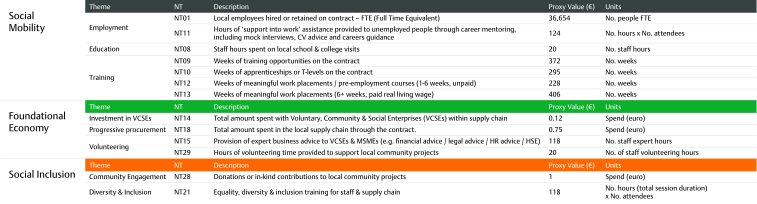
In the UK, social value is firmly embedded in legislation through the social value Act, PPN 002 (replacing PPN 06/20), the Procurement Reform Act (Scotland), and the Future Generation Act (Wales). Governments are actively encouraging public sector investments to maximise social impact by mandating social value reporting. Division United Kingdom and Ireland does this by reporting on Social and Local Economic Value (SLEV), calculated through the BAM TOMs, a framework based on the national TOMs (Themes, Outcomes, Measures) framework. More information on the SLEV methodology can be found under reporting principles.
Social value is how BAM measures social sustainability activities and is underpinned by three key strategic themes:
-
Social Mobility: empowering individuals by providing inclusive and accessible pathways in education, employment and training programmes.
-
Foundational Economy: building community wealth by maximising opportunity for local procurement, investing in local charities and social businesses (VCSEs), and volunteering time, skills and expertise.
-
Social Inclusion: fostering diversity, equity and inclusion (EDI), actively engaging with the community and creating lasting legacies that benefit the community long after construction is complete.
For each of these themes, a set of TOMs (Themes, Outcomes and Measures) further defines the activities delivered. Activities within this framework are logged at project level in the Social Sustainability Reporting Tool, accumulating to the total divisional SLEV performance.
BAM defined a social value target for division United Kingdom and Ireland based on the national TOMs framework. The target for 2026 is to deliver 35% social value (expressed as SLEV – Social and Local Economic Value) as a percentage of the reported revenue.
In 2025, the SLEV reported in division United Kingdom and Ireland was 19.9% (2024: 15.6%) and supported by data in 12 out of 13 BAM TOMs. This increase has been achieved by measuring performance in more projects and across more TOMs, in addition to more automated reporting and efforts to increase the SLEV performance at each project. This includes detailed steps in the Business Management System to embed Social Value opportunities in all phases of the project. While the 2026 target is ambitious, we expect the improvements we have made in these processes to deliver higher SLEV contributions.
Reporting principles social value
Division United Kingdom and Ireland
BAM has selected 13 core measures (NTs - National TOMs) from the nations TOMs framework that best reflect BAM's social value delivery across the project portfolio. Underneath NT1 (local employment), there are nine sub-measures covering additional characteristics of vulnerable employees (e.g., ex-offenders, long term unemployed, disabled, etc.).
These core measures and sub-measures were selected from the full list of national TOMs to bring focus to BAM's social value delivery and reporting. These are the measures that are most commonly valued by clients and/or where BAM has specific skills and capacity. The proxy value attributed to each TOM is a national proxy value that is used across the division.
The TOMs and proxy values used are from the 2022 national TOMs framework. The proxy values in the table below have been converted from Pounds Sterling to euro for reporting purposes, subject to the exchange rate.
The original 2022 proxy values in Pounds Sterling are consistently applied in the calculations, so changes in exchange rates don't influence the overall SLEV percentage generated.
The Netherlands
In division Netherlands, reporting is based on the SROI obligations as set out in public sector contracts. The permitted activities and the attributed value for each activity varies per project as this is determined by the policies of the client. They can, for instance, use the ‘Building Block' method, with a detailed table of proxy values for each target group and activity. Each activity is assigned the corresponding proxy value. In other methods, bespoke values are applied. Only approved activities that are signed off by the client count towards the total SROI delivered in the contract.
For the total SROI calculation, only finished projects are included. The overall SROI is determined by dividing the total SROI delivered on these projects by the total SROI obligations associated with them. Any surplus is the result of overdelivering SROI-generating activities on projects, beyond the obligations set by the clients.