Pollution (ESRS E2 – entity-specific)
BAM’s negative impact caused by air and soil pollution is associated with the upstream value chain, including emissions and hazardous substances generated by BAM’s suppliers and upstream joint venture partners.
Disclosures are related to the following material impacts, risks and opportunities as identified through BAM’s double materiality assessment process, refer to full details in chapter 6.1.
|
Material impact, risk or opportunity |
||
|
Pollution |
||
|
Pollution of air and soil |
(VC upstream) |
Negative impact |
|
Nitrogen risk |
(OO) |
Financial Risk |
The disclosures in this section should be read in conjunction with the disclosures in chapter 6.2 on Impact, risk and opportunity management. The topic of pollution is closely connected to the other environmental sub-topics such as climate change and biodiversity. The seven greenhouse gases connected to air pollution are included in section Climate change (ESRS E1), biodiversity loss as a direct impact of pollution is addressed in section Biodiversity (ESRS E4). Upstream pollution in BAM’s value chain is identified as a material impact in BAM’s double materiality assessment. The related disclosure requirements in ESRS E2-4 until ESRS E2-5 are specific to own operations, which is not considered material to BAM. ESRS E2-6 is disclosed with regard to the material financial risk related to the Dutch nitrogen-crisis. Refer to BAM’s double materiality assessment process in chapter 6.1 for more details.
Description of the processes to identify and assess material pollution-related impacts, risks and opportunities (IRO-1)
In 2025, BAM has screened its upstream business activities in order to identify its actual and potential impact. Based on internal consultations with subject matter experts, and consultations with key parties in BAM’s supply chain, the relevant upstream activities have been identified. BAM further discloses the assumptions and tools used in the impact assessment. The most impactful categories in relation to upstream pollution for BAM are global warming, human toxicity, ecotoxicity, acidification and eutrophication. The estimated relative impact of upstream pollution is enclosed in the graph in this paragraph.
The distribution is comparable to last year, with no significant changes. Human toxicity remains the most dominant contributor to the total of upstream pollution, which was 70% in 2024. This share increased in 2025, primarily due to large amounts of steel use in our construction projects in Ireland and improvements in data quality. Human toxicity refers to the adverse effects that pollutions have on human health. These impacts can arise from various sources of pollution and is the most impactful pollution for BAM. BAM’s upstream pollution also has a significant impact on acidification, eutrophication, and ecotoxicity (terrestic), and as described earlier on global warming.
Relative estimated impact of pollution in BAM's upstream value chain*
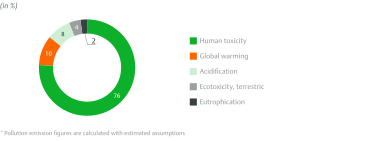
With the impact on human toxicity in BAM’s upstream operations, BAM will further investigate on the awareness about human toxicity impact and intends to reduce that impact going forward. In depth information about the global warming emissions in relation to the climate impact of BAM can be found in BAM’s Scope 3 disclosures in section Scope 3 and total GHG emissions (E1-6). Acidification, eutrophication and ecotoxicity have comparable percentages in relation to the total pollution, and a limited impact compared to the other two categories.
BAM further investigated its upstream activities and the impact in pollution category ‘Human toxicity’, for further details, refer to the text box Reporting principles and assumptions pollution in this paragraph. As a result of this analysis BAM was able to drill down on to activity type to check which activities are the most impactful. BAM determined that upstream pollution from the primary materials, asphalt, steel and concrete, but also from installation works have a significant negative impact specifically with regards to human toxicity.
BAM’s activity ‘installation works’ consists mainly of mechanical and electrical installations. In addition to installation works, category ‘exterior and interior work’ is significantly impacting human toxicity. This is attributable to its material use and related activities, such as aluminum and curtain walling, ceiling and partition wall systems, facade cladding metal (zinc, aluminum, copper, steel) and the use of stone product and brickwork. BAM recognises the need to address this negative impact on human toxicity in its upstream operations.
Policies related to pollution (E2-1)
While BAM’s sustainability policy does not explicitly address pollution, the policy does provide guidance on material use. With the efficient use of materials and use of sustainable alternatives BAM intends to minimise the upstream pollution. BAM is doing research on how this should influence the procurement processes for the purchase of materials.
External regulations take precedence over internal policies when it comes to pollution control. Local authorities have the mandate to impose restrictions on emissions and environmental impact related to material production. Companies must obtain operating licenses, which include specific conditions, such as limits on production volumes and allowable pollution levels. These licenses are monitored and enforced by the relevant local authorities, ensuring compliance with environmental standards.
Actions and resources related to pollution (E2-2)
BAM intends to provide more detailed reports on upstream pollution in the coming years. The availability of more qualitative data from ongoing analysis, data improvements and the increasing knowledge regarding emissions will enhance the quality of these reports.
BAM focuses on minimizing upstream pollution through a combination of strategic measures and process optimisations. The main pillars are:
-
Efficient use of materials: BAM actively manages material consumption during design and execution phases. This includes optimizing structures, applying digital design tools, and avoiding over-dimensioning.
-
Reduction of primary materials: There is a strong focus on reducing the use of non-biobased virgin materials such as concrete, steel, and asphalt. These materials cause significant pollution during extraction and production. BAM works on substitution by recycled or biobased alternatives and explores innovative solutions such as circular construction materials.
-
Research and knowledge development: Continuous research into the environmental impact of materials and collaboration with value chain partners to make emissions more transparent. This will lead to better traceability and reporting of upstream pollution.
BAM considers the specific mitigation hierarchy to allocate actions and resources:
-
Avoid pollution, including any phase out of materials or suppliers that have a significant impact
-
Reduce pollution, for example meeting the Do No Significant Harm criteria for pollution prevention and control according to the EU Taxonomy Regulation and its Delegated Acts (minimisation of pollution)
Target related to pollution (E2-3)
Pollution is not included as a specific element in BAM’s strategy. In BAM’s research and discussion with experts, BAM has concluded that a separate target for upstream pollution is not suitable, and recognises the strong dependency on material use. Therefore, upstream pollution is incorporated in the (indirect) targets set for the reduction of non-biobased virgin materials: BAM aims to achieve a 50% reduction by 2030 compared to 2019. The focus is on reducing the consumption of primary materials such as concrete, steel and asphalt. Those materials have substantial environmental impact and result in air and/or soil pollution that occurs during the extraction and processing of the materials. Also, BAM tries to substitute these high-impact materials for a more sustainable materials and/or recycled materials. For further details on (targets related to) material use, refer to section Resource use and circular economy (ESRS E5).
Reporting principles and assumptions pollution
BAM has used procurement data to gain insights in upstream pollution. Upstream pollution emissions from purchased goods and services are based on BAM’s spend data. The spend data is converted into pollution emissions using public available conversion factors. BAM has selected Exiobase v3.8.2. as the emission factor database to convert spend data into pollution data and impact categories. The BAM procurement categories have been manually mapped against the categories in the Exiobase database based on expert judgement. BAM used the Environmental Cost Indicator (ECI) to compare impact categories with each other. BAM considers this calculation as the most effective method currently available for assessing upstream pollution. This approach highlights the category where BAM has the highest environmental impact. There is an expectation that over time, the methodology for measuring upstream pollution will improve, potentially involving updates of weighting factors and measurement methods. BAM does not yet disclose the absolute emissions related to the different pollution categories, because of estimation uncertainties of this level of detail.
BAM does not disclose the amount of pollutants that are emitted through BAM’s purchased materials in 2025. When the traceability of purchased materials improves, BAM will be able to report in the future on the amount of pollutants. If material to BAM, BAM includes the operating expenditures incurred in the reporting period in conjunction with major incidents, including any provisions for the environmental protection and remediation costs, e.g., for rehabilitating contaminated sites, removal of environmental contamination at sites and similar measures. No such material remedial (financial) actions have come to BAM’s attention in 2025.
Asphalt production
Asphalt production is a critical component in BAM’s construction operations, yet it is essential to acknowledge its environmental impact, particularly concerning upstream pollution. The production process involves a substantial impact on human toxicity due to the extraction and refinement of raw materials. The most impactful emissions are benzene and Polycyclic Aromatic Hydrocarbons (PAHs), which releases during the production of new asphalt mixtures with the use of recycled asphalt. BAM is committed to implement sustainable practices and explore innovative technologies to minimise these environmental impacts. BAM’s asphalt supplier in the Netherlands is the joint venture AsfaltNu. In 2022 and in 2023, operational carbon filters were installed in various asphalt plants from AsfaltNu which ensure a significant reduction in emissions. In the meantime, the plants are working on smarter and more sustainable techniques for the longer term. AsfaltNu started building a new asphalt plant in 2025, where innovative techniques take care for a production that has a low pollution in emissions, fragrance free and is almost noise free.
For the Netherlands as well for the UK and Ireland, environmental performance in the asphalt sector is increasingly shaped by national and regional sustainability goals. Local authorities play a key role in regulating emissions and environmental impacts related to asphalt production. Companies must obtain environmental permits that include specific conditions such as limits on production volumes, emissions to air, and noise levels. These permits are monitored and enforced to ensure compliance with environmental standards, forming a critical part of the MKI (Milieukostenindicator)-based approach or the Life Cycle Assessment-based approach to sustainable infrastructure.
Steel production
Steel production is from origin a fundamental material for construction work and is also associated with significant upstream pollution. The production of steel leads to high nitrogen emissions, which have a negative impact on the environment. The production of steel also leads to the emission of particulate matter, which has a negative impact on the human toxicity. The traceability of steel in the construction sector is complex due to the multifaceted nature of the supply chain.
Many companies have already set greenhouse gas (GHG) emission reduction targets. However, steel producers continue to lag in defining clear and actionable emission reduction plans. Pollution levels are partly constrained by the requirement for local operating licenses, which impose certain environmental standards.
Regulatory oversight plays a key role: emissions from chimneys are measured by supervisory authorities, while regional environmental agencies monitor compliance more broadly. In addition, national policies introducing stricter nature and environmental regulations are reinforcing the urgency to reduce emissions across the sector.
In the Netherlands, BAM has taken a leading role in the Bouwakkoord Staal (Steel Construction Agreement), joining forces with other frontrunners in the construction sector to reduce the use of raw materials and promote more sustainable steel production. BAM is particularly committed to stimulating the reuse of steel, with a strong focus on accelerating this transition within the infrastructure sector.
The Bouwakkoord Staal sets out national ambitions for the entire steel construction value chain, including:
-
A minimum 60% reduction in CO₂ emissions compared to 1990 levels,
-
Increased use of renewable energy and energy-saving measures,
-
Lower environmental impact from substances that pose risks to human health and the environment,
-
Promotion of reuse and recycling of steel objects, components, and materials.
Through these joint efforts, the sector aims to contribute meaningfully to the necessary national and international climate transition by 2030.
BAM will further investigate in their traceability to reduce the impact in pollution. BAM focuses on the reduction of the consumption of steel related to BAM’s targets for the use of primary materials. BAM will use as much as possible recycled steel, currently at a level of 67% (2024: 67%) recycled steel use relative to the total steel consumption, refer to section Resource use and circular economy (ESRS E5) for further details.
Concrete production
Concrete production is also associated with considerable upstream pollution. This has severe impact on climate change and also affects human toxicity. BAM is not yet able to measure and report in detail about the exact emissions of concrete, due to various variables, such as regional production and the lack of activity data. Quantification of the specific amounts of concrete is considered a valuable insight, as the specific substance and the level of sustainable production per supplier varies. BAM aims to reduce the consumption of concrete and/or replace it by more sustainable concrete or other materials. For example, BAM’s initiative ‘GROENR BETON’ allows BAM to use more sustainable concrete which reduces the pollution of the concrete production. Additionally, BAM aims to collaborate as much as possible with suppliers that have climate and sustainability-related certifications, such as ISO 14001 and CSC Certification.
In the Netherlands, the Betonakkoord sets the framework for sustainable concrete production, with clear limitations on MKI (Milieukostenindicator), pollution, and circularity. These form the foundation of the Roadmap Sustainable Concrete, which outlines sector-wide reduction initiatives, including estimated emission reductions and the relevant value chain actors involved.
For the UK and Ireland, upstream pollution is increasingly addressed through a combination of regulatory frameworks and industry-led roadmaps. The UK Concrete and Cement Industry Roadmap to Beyond Net Zero outlines a comprehensive strategy to reduce emissions across the entire value chain, including upstream activities such as raw material extraction, transport, and cement production.
Anticipated financial effects from material pollution-related risks and opportunities (E2-6)
The nitrogen risk in the Netherlands is a financial exposure that potentially affects BAM through a regulatory & policy risk. Dutch courts have ordered the government to cut nitrogen emissions significantly by 2030 to meet EU rules, with potential fines if targets are missed. Ongoing policy uncertainty (shifts in standards, possible loosening, changes to permit systems) potentially affect BAM's project planning and compliance costs.
Further transition risks are limited as the nitrogen emissions in BAM's own operations are relatively low. The financial consequences of shifting to lower-nitrogen activities, such as altering operations or investing in cleaner technology are linked to the use of electric equipment. The investments in electric equipment are already part of the transition plan to reduce GHG emissions, refer to section Climate transition plan (E1-1).
Current projects face no immediate delays. BAM's dedicated nitrogen taskforce, comprising experts from all businesses in division Netherlands, closely monitors legal developments and their impact on projects. We proactively assess nitrogen risks in tenders to avoid exposure to potential cancellations. Through careful monitoring, adaptive planning, and a diverse project portfolio, we aim to remain resilient while contributing to national goals for emission reduction and ecological recovery.
For 2026 and beyond, BAM still faces uncertainty around how the nitrogen policy will evolve, particularly regarding future permit availability and regional emission ceilings. Project timelines and investment decisions could be disrupted if rules tighten, causing delays, cancellations, or added compliance costs that are difficult to estimate today. Political dynamics and court decisions add volatility, which can make long-term planning and pricing of projects even more difficult.